
Advertisement

- Updated on April 15, 2026
- IST 1:52 am

Imagine this: Rohan, a 17-year-old from Delhi, downloads a popular “free” EdTech app to prep for his JEE exams. It’s sleek, interactive, and promises personalized study plans based on his learning style. He signs up quickly, granting access to his camera for virtual classes, location for nearby tutoring centers, and even his browsing history for tailored recommendations. Weeks later, his inbox floods with ads for unrelated products—energy drinks, gaming consoles, even loan offers. Confused, he digs deeper and realizes his study habits, test scores, and personal details have been shared with third-party marketers. “I thought I was just learning math,” he tells a friend, feeling violated. “Turns out, my data was the real product.”
Now, contrast that with Priya, a 35-year-old teacher from Bangalore. She uses the same app to create lesson plans for her students. But when a data breach hits the headlines, she discovers that sensitive info—like her students’ progress reports and family contact details—has been exposed. In a country where digital education boomed post-pandemic, stories like these are becoming all too common. So, what’s going on? Are these “free” EdTech apps really free, or are they trading your privacy for profit? In this investigative piece, we’ll peel back the layers of data collection in India’s EdTech scene, explore the risks of misuse, and arm you with tips to choose safer platforms. Let’s uncover the truth behind the screens.
Understanding EdTech and the "Free" Model: A Double-Edged Sword
First things first—what exactly is EdTech, and why are so many apps “free”? EdTech, short for educational technology, encompasses apps, platforms, and tools that make learning digital and accessible. Think Byju’s, Unacademy, Duolingo, or Khan Academy—giants that have revolutionized education in India, especially for our massive student population of over 250 million. These apps offer everything from live classes to AI-driven quizzes, often at no upfront cost. But here’s the catch: nothing is truly free in the digital world. As the saying goes, if you’re not paying for the product, you are the product.
These platforms operate on a freemium model, where basic features are free, but premium content requires payment. To sustain themselves, they rely heavily on data monetization. According to industry reports, the global EdTech market is projected to hit $404 billion by 2025, with India leading the charge in Asia. But beneath the shiny interfaces lies a web of data harvesting. Apps collect vast amounts of personal information: your name, age, location, device details, learning patterns, and even behavioral data like how long you spend on a problem or your emotional responses via facial recognition in some advanced tools. This data isn’t just used to improve your experience—it’s often packaged, anonymized (or so they claim), and sold to advertisers, researchers, or even other companies.
Why does this matter for Indians aged 15-45, our target audience here? Many of you are students, parents, or young professionals upskilling amid a competitive job market. With smartphone penetration at 71% in India, EdTech has become a lifeline. But in a nation where data breaches affected over 1.5 billion records in 2023 alone, the stakes are high. Free app risks aren’t abstract—they hit home when your study data leads to targeted scams or identity theft.
How "Free" EdTech Apps Collect and Monetize Your Data: The Mechanics Exposed
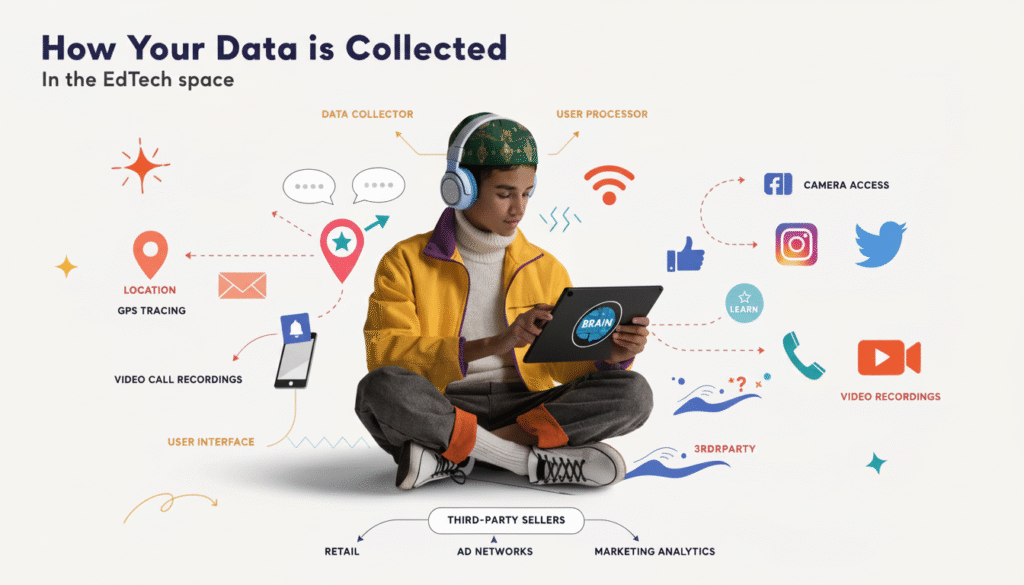
Let’s break it down like a lesson plan. When you download an EdTech app, the data collection starts immediately. During signup, you’re asked for permissions: access to contacts (to “invite friends”), microphone (for “interactive sessions”), and storage (to “save progress”). But it goes deeper. Cookies and trackers monitor your in-app behavior, while integrated analytics tools from Google or Facebook capture cross-platform data.
Once collected, this info fuels monetization in sneaky ways:
- Targeted Advertising: Your learning data reveals interests—struggling with physics? Expect ads for tutoring services. But it doesn’t stop there. Apps share aggregated data with ad networks, who build profiles for hyper-targeted marketing. For instance, if you’re a teen prepping for exams, your data might be sold to brands selling stress-relief products.
- Third-Party Sales: Many apps sell anonymized datasets to market researchers or AI firms. A 2025 report from Forbes highlights how student data from learning management systems is harvested and sold, often without clear consent. In India, where EdTech startups raised $4 billion in funding last year, this is big business.
- Partnerships and Affiliations: Apps partner with banks or insurers, sharing data for “personalized offers.” Ever wondered why your EdTech app suggests education loans? Your progress data signals financial needs.
But here’s where it gets dark: not all data stays anonymized. Re-identification risks are real—combine your location, age, and study habits, and hackers can piece together your identity. A recent investigation by The Markup revealed how EdTech companies profile students’ emotional states for profit, raising ethical alarms.
The Dark Side: Potential Misuse and Real-World Risks in India
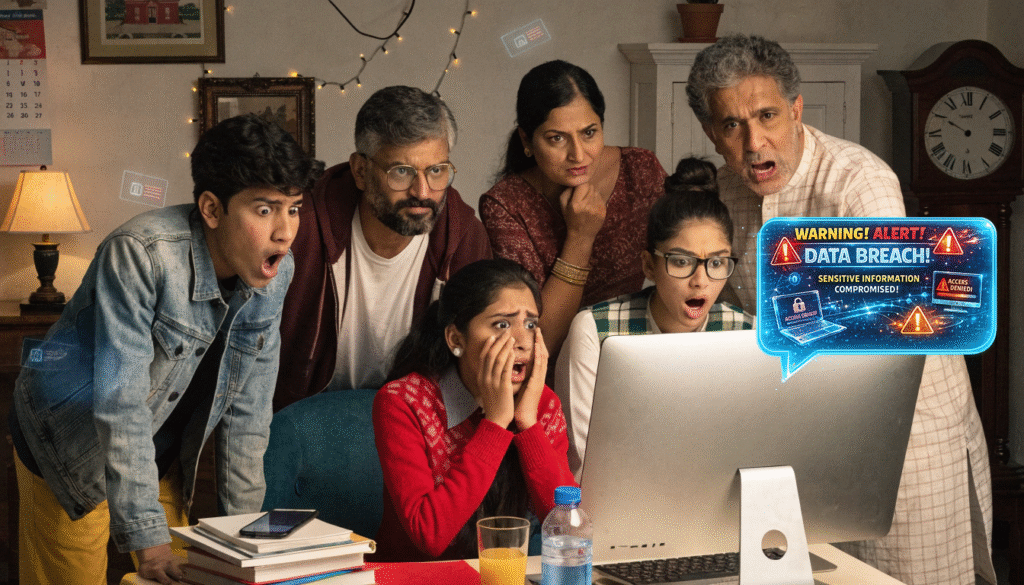
Now, the juicy part—the dangers. Student data security is paramount because EdTech users include minors, whose info is extra sensitive. In 2025, with India’s Digital Personal Data Protection (DPDP) Rules freshly notified, the landscape is shifting. These rules, effective from November 2025, mandate consent-based data processing and heavy fines up to Rs 250 crore for breaches. But many “free” apps still exploit loopholes.
Consider the misuse scenarios:
- Data Breaches: Hackers target EdTech platforms for rich datasets. In 2024, a major Indian EdTech firm suffered a leak exposing 1 million student records, leading to phishing attacks. In 2025, with AI amplifying threats, such incidents could spike.
- Surveillance and Profiling: Apps track more than academics—some use geolocation to monitor attendance, potentially sharing with schools or employers. For young users, this borders on digital surveillance, echoing concerns from the Sanchar Saathi app fiasco, where privacy advocates decried government-mandated software as a “snooping tool.”
- Exploitation of Minors: EdTech for kids requires parental consent under DPDP Rules, but enforcement is spotty. A Dalberg report notes that platforms must rethink personalization without invasive data collection, as targeted ads based on child behavior are now prohibited.
- Economic Exploitation: Selling data to third parties fuels inequality. Low-income students’ info might be used for predatory lending ads, widening the digital divide.
From a balanced perspective, not all EdTech is villainous. Proponents argue data helps personalize education, improving outcomes for underserved areas. A Enago Academy piece points out that while risks exist, ethical EdTech can safeguard data through anonymization. Yet, critics like digital rights activists warn of “data colonialism,” where foreign-owned apps (many backed by global VCs) extract Indian users’ info for profit.
The Indian Context: Tradition Meets Tech in a Privacy Battle

India’s EdTech boom isn’t isolated—it’s intertwined with our cultural push for education. From Kota coaching hubs to online upskilling for IT jobs, digital tools are a game-changer. But our privacy landscape adds a twist. The DPDP Act 2023, now enforced via 2025 Rules, aligns India with global standards like GDPR, requiring “purpose limitation”—data collected for learning can’t be repurposed for ads without consent.
Yet, challenges persist. In a country with low digital literacy, many users click “agree” without reading fine print. The Rules introduce Consent Managers—intermediaries to help track consents across apps—but adoption is slow. For EdTech, this means overhauling systems: no more default data sharing. A TreeLife analysis highlights how children’s platforms must verify parental identities, adding friction but boosting safety.
Culturally, Indians value education highly, often overlooking privacy for convenience. But post-Aadhaar leaks and recent government app controversies, awareness is rising. Digital rights in India are evolving, with activists pushing for ethical EdTech that prioritizes users over profits.
Real Stories: Triumphs, Tumbles, and Wake-Up Calls
Let’s hear from those affected. These anecdotes, drawn from forums and reports, illustrate the human cost.
- Amit’s Ordeal, 22, Mumbai: As a college student using a free quiz app, Amit noticed weird ads stalking him online. Turns out, his data was sold to a marketing firm. “It felt like my brain was up for auction,” he shares on Reddit. After a DPDP complaint, the app was fined, but the damage was done—his info led to spam calls.
- Sana’s Scare, 28, Hyderabad: A parent using an EdTech platform for her 12-year-old’s homework, Sana discovered a breach exposed family addresses. “We got unsolicited home visits from sales reps,” she recounts. Switching to a privacy-focused app restored her peace.
- Raj’s Revelation, 40, Chennai: An EdTech entrepreneur, Raj admits early models relied on data sales. “Post-DPDP, we pivoted to subscriptions. It’s harder but ethical,” he says, highlighting a positive shift.
These tales show the spectrum: from victims to reformers. As per a 2025 IJIRL dissertation, unregulated EdTech exposes minors to exploitation, urging sustainable models.
Guidelines for Choosing Privacy-Focused Learning Platforms: Your Safety Toolkit
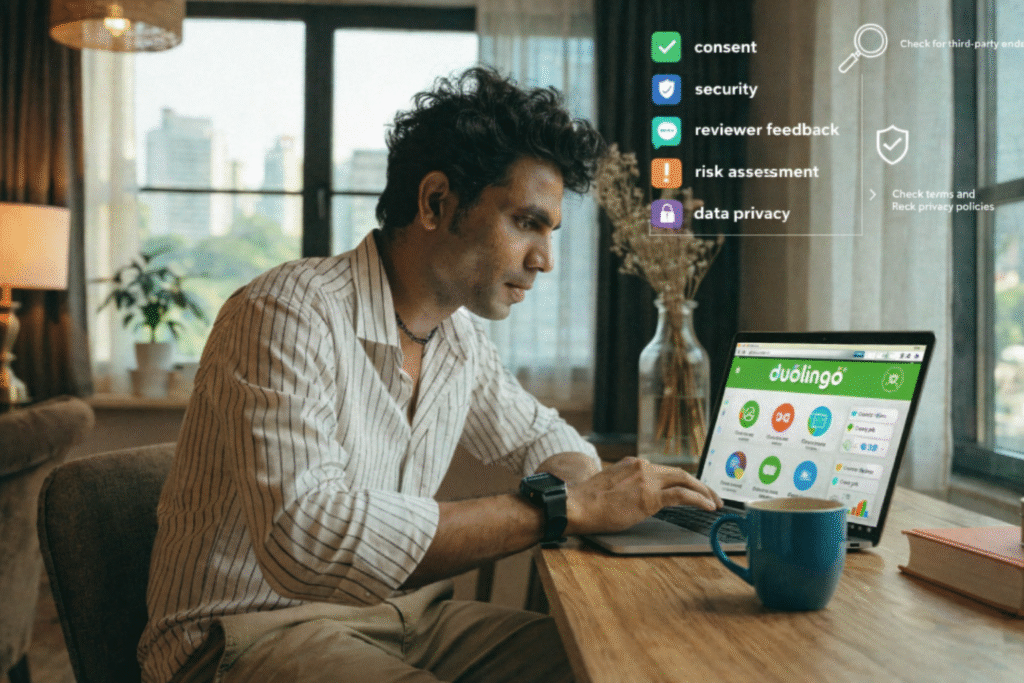
Worried? Don’t ditch EdTech—choose wisely. Here’s how to navigate free app risks and embrace ethical EdTech:
- Check Privacy Policies: Look for clear statements on data use. Apps compliant with DPDP Rules will detail consent withdrawal options.
- Verify Consent Mechanisms: Opt for platforms using verifiable parental consent for minors. Avoid those with buried permissions.
- Assess Security Features: Seek end-to-end encryption and regular audits. Tools like Privacy Pillar recommend checking for GDPR-like standards.
- Read Reviews and Ratings: User forums expose hidden practices. Apps with high privacy scores on sites like Common Sense Media are safer.
- Explore Alternatives: Paid or open-source options like Moodle prioritize privacy over ads. In India, government-backed DIKSHA offers free, secure learning.
- Use Tools for Control: Install ad-blockers and VPNs. Report violations to the Data Protection Board under DPDP.
- Educate Yourself: Stay updated on online safety. Resources from Internet Freedom Foundation can help.
By following these, you protect student data security while enjoying EdTech benefits.
Wrapping It Up: Time to Reclaim Your Digital Rights
So, does the dark side of EdTech mean doom for digital learning? Not at all—it’s a wake-up call. In 2025, with DPDP Rules reshaping the game, “free” apps are under scrutiny, pushing towards ethical practices. But the power lies with you: demand transparency, choose wisely, and hold companies accountable. For Indian users aged 15-45, this isn’t just about apps—it’s about safeguarding your future in a data-driven world.
If this resonates, share your experiences in the comments. Have you faced data misuse on EdTech platforms? Let’s spark a conversation on digital rights in India. And if you’re ready to switch, start by auditing your apps today. Your data, your rules—let’s make EdTech work for us, not against us!
You May Like This



Advertisement

You May Like This







Advertisement

Advertisement

Advertisement