
Advertisement

- Updated on September 8, 2026
- IST 4:38 am
India has committed ₹10,371.92 crore to the IndiaAI Mission over five years.
As of February 2026, it had released ₹400.94 crore of it.
That is under 4 per cent — disclosed by the Ministry of Electronics and Information Technology in a written reply to the Rajya Sabha, which makes it the government’s own number rather than anyone’s estimate.
In the same period, private companies pledged tens of billions of dollars to build AI infrastructure in India. The gap between those two facts is the most important thing happening in Indian technology right now.
What the state has actually spent
The disbursement record, year by year:
2024-25: ₹21.79 crore released, against a revised estimate of ₹173 crore.
2025-26: ₹379.15 crore released, against a revised estimate of ₹800 crore.
Both years came in well below even their own revised targets, and the revised targets were already a fraction of the annual run-rate a ₹10,372 crore programme implies.
The allocations by pillar show where the money is meant to go: Compute ₹4,563 crore, Foundation Models ₹1,971 crore, Startup Financing ₹1,942 crore.
Something has been delivered. More than 38,000 GPUs are onboarded to the common compute facility at subsidised rates, with 14 cloud providers empanelled. For Indian startups and labs that cannot buy their own hardware, that is real and useful.
But a mission that has moved 4 per cent of its budget in two of its five years is not yet the thing it was announced as.

Twenty crore for safety
One line in the allocation deserves separate attention.
Safe and Trusted AI: ₹20.46 crore.
That is roughly 0.2 per cent of the total outlay — about one two-hundredth of the programme, for the entire question of whether the systems being built are reliable, unbiased, secure and accountable.
Compute gets 44 per cent. Safety gets a rounding error.
Reasonable people can argue India should prioritise capacity first and governance later. But the ratio is a policy choice, it is on the record, and it will be quoted back at some point.
Meanwhile, the private money
The contrast is stark.
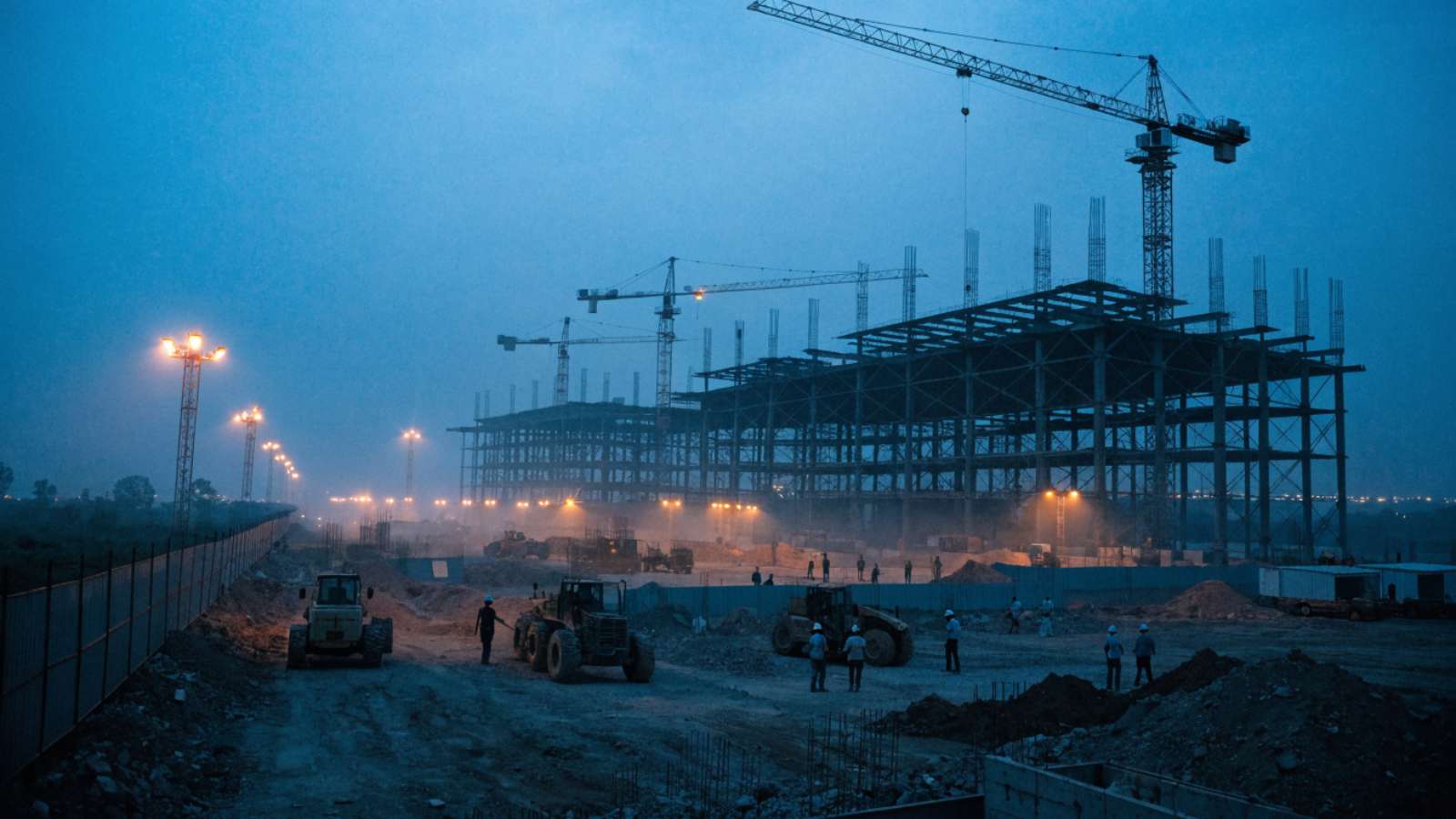
India’s data centre capacity passed 1,700 MW at the end of 2025 and is projected to grow about 30 per cent in 2026, adding roughly 500 MW. Investment of US$56.4 billion was recorded in 2025, with cumulative commitments around US$126 billion.
At the India AI Impact Summit in February 2026 — 100-plus countries, a declaration endorsed by 92 governments and organisations — the pledges announced included Reliance at US$110 billion over seven years, Adani Enterprises at US$100 billion by 2035, Google at US$15 billion, and further commitments from Lightspeed and General Catalyst.
Google’s US$15 billion gigawatt-scale AI hub at Visakhapatnam, announced in October 2025, is described by the company as its largest such investment outside the United States.
Read those pledges carefully
The summit headline was “over US$200 billion in expected commitments.” The itemised list does not reconcile with it — Reliance and Adani alone total US$210 billion, on different timelines stretching to 2035.
These are pledges across varying multi-year horizons, not committed capital expenditure. Some will be built. Some will be revised. Some will quietly not happen, as is normal for announcements of this kind anywhere in the world.
The same caution applies to the data centre figures: US$126 billion is commitment, not spend. The 1,700 MW is the number that is actually in the ground, and it is concentrated — Mumbai alone holds more than half the country’s operational inventory, and Mumbai, Chennai, Delhi-NCR and Bengaluru together hold about 90 per cent.

Indian companies deploy fast. They do not build deep.
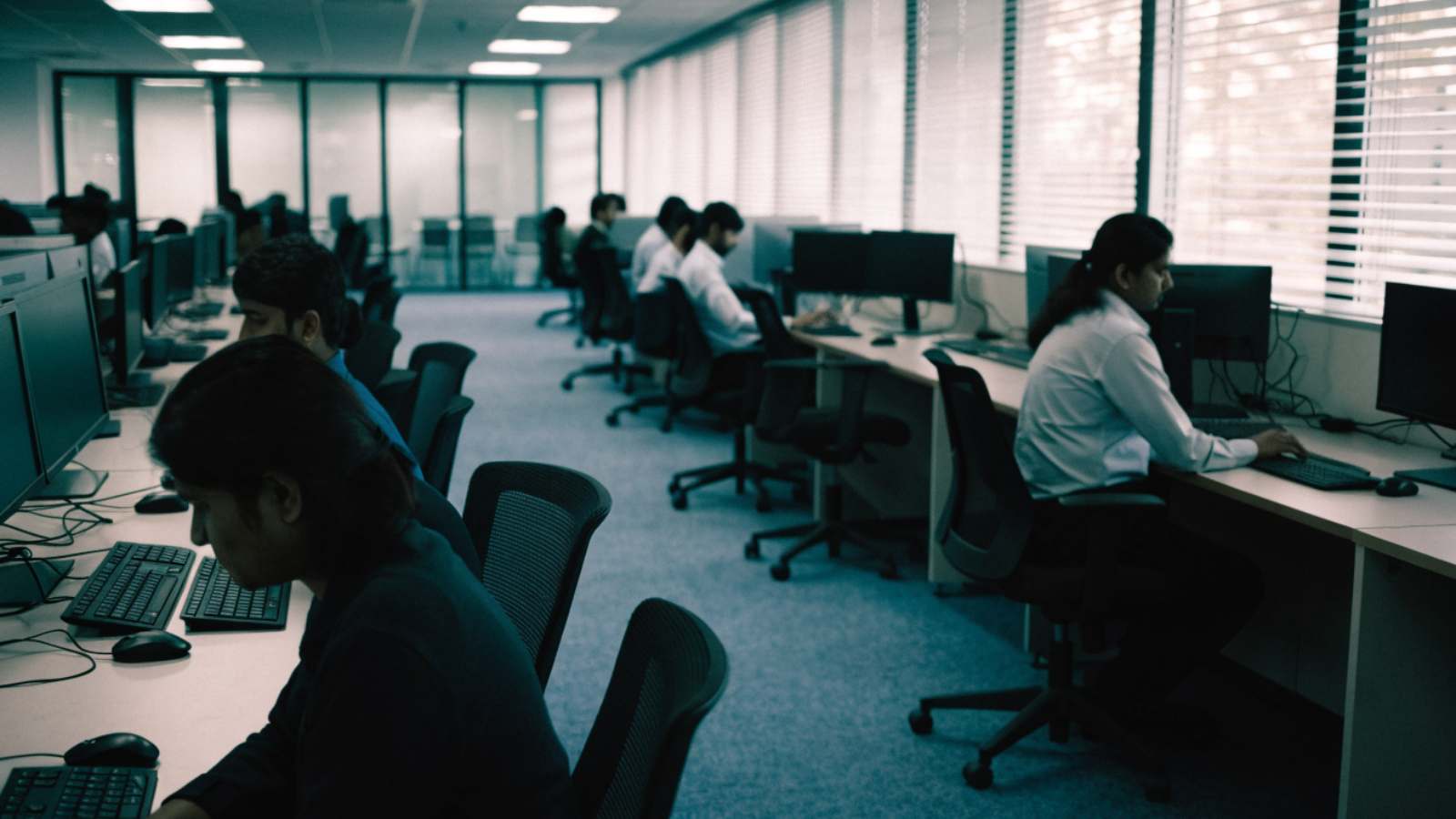
Deloitte’s 2026 enterprise AI survey found Indian organisations ahead of global peers on adoption: 40 per cent report significant or full AI usage, against about 28 per cent globally.
At-scale deployment by function runs high — product development 62 per cent, strategy and operations 56 per cent, marketing and sales 55 per cent. And 94 per cent expect to increase AI spending next year.
Then the qualifier. Only 17 per cent are attempting fundamental business-model change; 44 per cent are doing incremental process redesign. And on deep in-house AI expertise, Indian firms score 0 to 4 per cent against a global 2 to 8 per cent.
India is deploying other people’s models faster than anyone and building fewer of its own. That is a rational commercial choice and a real strategic exposure at the same time.
Deloitte has not published the sample size for the India cut, which is worth knowing before treating any single percentage as precise.
The headcount question, stated accurately
This is where reporting has been sloppiest, so it is worth being exact.
TCS ended FY26 with 584,519 employees, a net reduction of 23,460 over the year — about 4 per cent.
That is net. It is hiring minus attrition minus restructuring, not a redundancy count. The layoffs TCS announced in July 2025 were around 12,000 roles, roughly 2 per cent of the workforce. Several outlets have reported the 23,460 as a layoff figure. It is not.
At the same time the company extended 25,000 campus offers and is targeting around 40,000 freshers annually. Indian IT unions have accused TCS of violating the Industrial Disputes Act over the 2025 layoffs.
The honest summary is that India’s largest IT employer shrank while still hiring heavily at the entry level — consistent with AI changing the shape of delivery work, not yet with AI eliminating it wholesale.
The country the numbers describe
India has 1,028.61 million internet subscribers as of December 2025, per TRAI. But urban internet density is 116 per 100 people against rural’s 47.6.
That is the market every one of these AI investments is ultimately aimed at: a billion connected people, more than half of them on the thin side of a gap that has not closed.
The private sector is building the compute. The state has released 4 per cent of its budget and set aside a fifth of one per cent for safety. Both of those things will matter in five years, and only one of them is currently being reported.
IndiaAI Mission disbursement figures are from MeitY’s reply to the Rajya Sabha, data as of 9 February 2026. Data centre figures are from CBRE. Summit pledges are from the Press Information Bureau. Enterprise survey data is from Deloitte’s State of AI in the Enterprise 2026, India cut, for which the sample size is not publicly disclosed. Subscriber data is from TRAI’s quarterly report for the period ending 31 December 2025.
You May Like This
1



Advertisement

You May Like This


Advertisement

Advertisement

Advertisement