In October 2025 an Indian skincare influencer sent ten sunscreens to a lab.
Six of them came back delivering less than half the sun protection printed on the bottle. One claimed SPF 70 and tested at 12.8.
The story went everywhere. It is also more complicated than the headlines allowed, and the complication matters — because the same set of results contains a number that quietly undermines the test itself.
What was tested, and what came back
Nitin Joshi, a skincare creator with about 1.6 million followers, commissioned testing at MS Clinical Research in Bengaluru and the Centre for Cruelty-Free Testing at MIET Meerut, using in-vitro protocols under ISO 24443 and COLIPA 2011.
The results, as reported:
Renee — claimed SPF 70+, tested 12.81
WishCare — claimed 50+, tested 12.94
Dot & Key — claimed 50+, tested 14.98
Lotus — claimed 50+, tested 16.89
Deconstruct — claimed 55+, tested 17.82
Foxtale — claimed 55+, tested 36.90
Lakme — claimed 50+, tested 52.96
Minimalist — claimed 50+, tested 78.54
Derma Co. — claimed 50+, tested 79.72
Aqualogica — claimed 50+, tested 146.08
Look at the bottom of that list
Most coverage focused on the failures. The more revealing entries are the passes.
Aqualogica, claiming SPF 50+, tested at 146. Derma Co. and Minimalist came in around 79 against the same 50+ claim.
An SPF of 146 is not a good result. It is close to a physically implausible one, and no manufacturer would under-claim by that margin on purpose — SPF is a selling point.
When a test returns values three times the label at one end and one-fifth of it at the other, the sensible first question is not “which brands are lying” but “how reliable is this measurement?”
Why in-vitro results are contested
Dermatologist Dr Jinal Mehta publicly disputed the methodology, arguing that in-vitro testing alone is not sufficient to establish an SPF rating.
That is the mainstream position in the field. The reference method for SPF is in-vivo — applied to human skin at a controlled dose, exposed to a solar simulator, with the minimal erythemal dose measured against unprotected skin. It is slow and expensive, which is exactly why in-vitro alternatives exist.
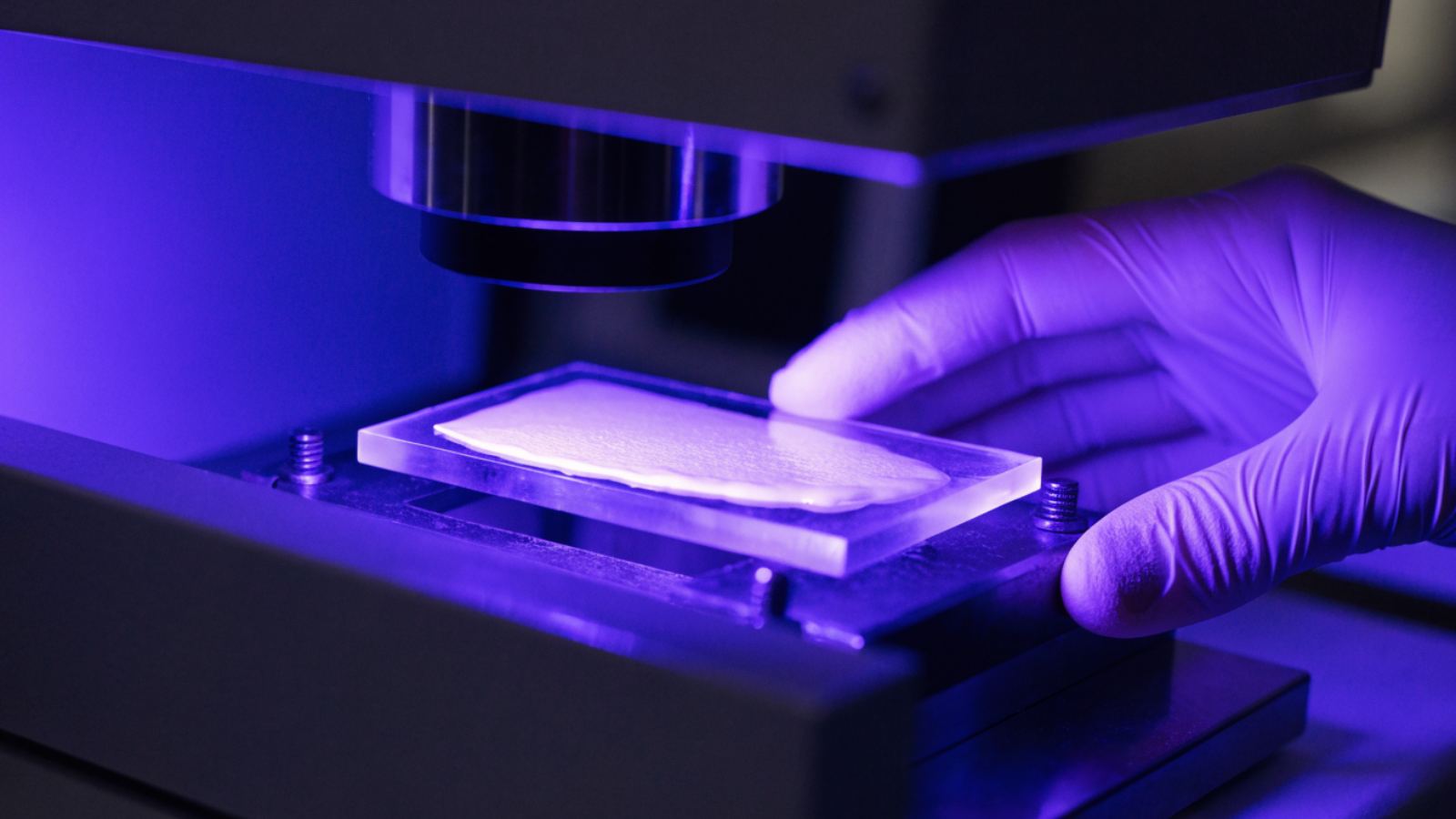
In-vitro testing spreads the product on a synthetic substrate and measures light transmission. It is genuinely useful for screening and reformulation. It is also sensitive to film thickness, substrate roughness, application technique and pre-irradiation — variables that can move a result substantially.
The trade press covered the row under the heading “‘Sunscreen scam’ or social media spin?”, which is a fair summary of where it landed.
What this is, and what it is not
This was influencer-commissioned testing, not a regulatory finding. No Indian authority has published results confirming these numbers, and no brand named has been sanctioned on the basis of them.
None of which means the concern is invented. Six products falling far short is a pattern, not a single anomaly, and Indian sunscreen has faced credible questions about label accuracy for years.
The honest position is uncomfortable and worth stating plainly: there is reasonable cause to doubt SPF claims on the Indian market, and this particular test is not strong enough to tell you which specific bottle to distrust.
The market this lands in
India’s sunscreen category is estimated at around ₹2,500 crore, inside a beauty and personal care market that Redseer sizes at US$23 billion in FY25, heading to US$40 billion by 2030 at about 12 per cent a year.
Sun care has been one of the loudest growth stories in that market, driven by exactly the audience most exposed to this controversy: young, urban, online buyers who chose these brands because creators recommended them. Gen Z is estimated to drive around 45 per cent of beauty spending.
This is a category built substantially on influencer trust, now having its central product claim questioned by an influencer. Both the growth and the crisis come from the same place.
What the regulator has done
In May 2026 the Central Drugs Standard Control Organisation issued a public notice reminding the industry that no cosmetic may carry false or misleading claims, that cosmetics may not make medical or therapeutic claims, and that labels must not have altered or obliterated manufacturer information. Firms were directed to check compliance with the Cosmetics Rules 2020.
It is a restatement of existing law rather than new enforcement, and it does not establish mandatory independent SPF verification.
Which means the gap that produced this story is still open. An Indian brand can print SPF 50 on a bottle, and no routine independent check confirms it before that bottle reaches a shelf.
How to buy sunscreen while this is unresolved
Practical, and not dependent on trusting any single lab result:
Use more than you think. Real-world SPF failure is overwhelmingly a dosage problem. Laboratory ratings assume 2 mg per square centimetre; most people apply a quarter to half that. Under-applying an honest SPF 50 gets you closer to SPF 10 than to 50. That is a bigger effect than anything in the table above.
Reapply. Every two hours outdoors, and after swimming or heavy sweating, regardless of the number.
Prefer brands with published in-vivo test data. Some Indian brands publish it. Most do not. Asking is reasonable.
Do not stop using sunscreen because of this story. A sunscreen delivering SPF 13 when it claims 50 is a serious labelling failure and still far better than nothing.
The regulatory fix is straightforward and has not happened: mandatory in-vivo verification by an accredited lab, with results filed and available. Until it does, the consumer is doing the quality control, and a creator with a lab budget is doing more of it than the state.
Test results are as reported by Business Standard in October 2025 from testing commissioned by an independent creator, not by a regulator; the methodology has been publicly disputed by practising dermatologists. Market sizing is from Redseer’s Beauty Blitz 2030 and published industry estimates. This article is general information and not medical advice.