

Advertisement

Advertisement

- Updated on May 15, 2026
- IST 11:28 am
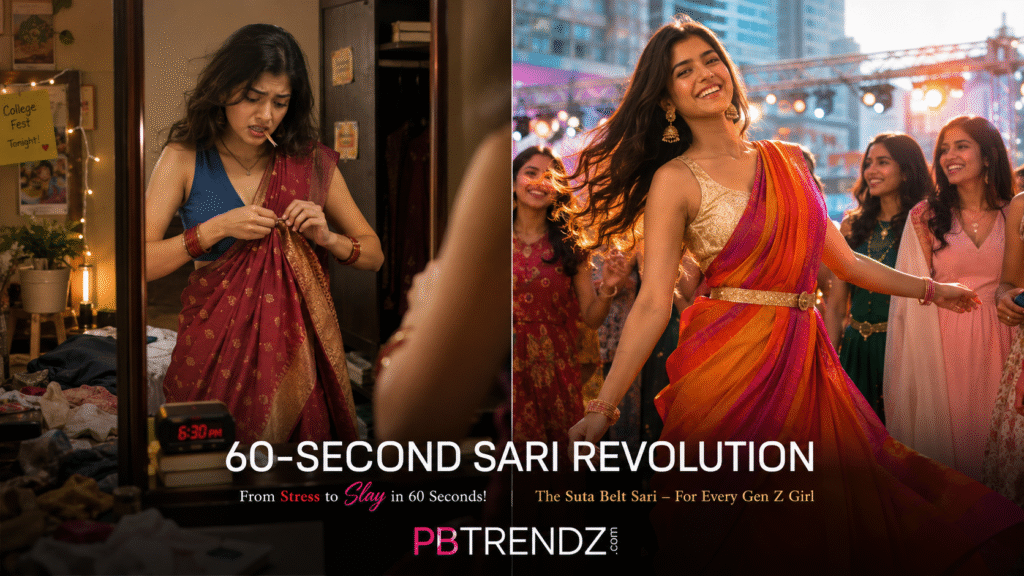
Imagine this: Priya, a 21-year-old college student from Delhi, is frantically getting ready for her university cultural fest. She’s been wrestling with a traditional silk sari for over 45 minutes—safety pins scattered everywhere, the pallu refusing to stay put, pleats looking more like a crumpled mess than elegant folds. By the time she reaches the venue, she’s sweaty, stressed, and already exhausted. “Why does something so beautiful have to be this complicated?” she mutters to her roommate, missing half the dance performances as she constantly adjusts her drape.
Now picture Neha, 22, from Mumbai. She’s heading to the same fest but slips into a pre-draped sari from Suta in literally under 60 seconds. Belt secured, pleats perfectly in place, pallu draped effortlessly over her shoulder—no pins, no fuss, just instant elegance. She twirls through the night, confident, comfortable, and completely in the moment. “This is how Gen Z does ethnic now,” she beams to her friends, posting a quick reel that goes viral by morning.
So, what’s the truth? Is the pre-draped sari revolution a game-changing hack for India’s young women or a cultural shortcut that’s killing the ancient art of draping? With college fests, internships, work parties, and endless social commitments, can convenience fashion India actually revive the sari for a new generation—or is it quietly burying tradition? In this blog, we’ll unpack the risks, the rewards, and the real-life experiences of Gen Z navigating the pre-draped saree 2026 wave. Plus, we’ll share easy sari-drape tips and styling ideas rooted in our desi heritage. Let’s dive in and figure this out together!
Understanding the Pre-Draped Sari: A Gen Z Cultural Shift
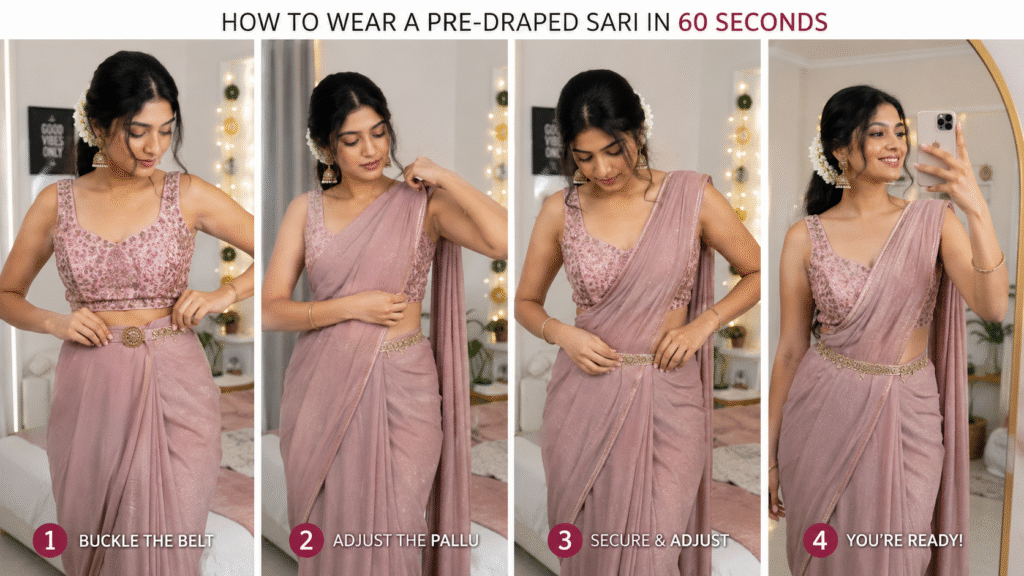
First, let’s get the basics down. The sari has been India’s timeless symbol of grace for centuries—six yards of fabric that tell stories of heritage, craftsmanship, and femininity. But let’s be real: for most Gen Z women juggling lectures, assignments, part-time gigs, and social media, the traditional drape feels like a full-time job. Enter the pre-draped saree 2026 revolution. These are ready-to-wear wonders—pre-stitched pleats, belt-secured styles, or fully pre-draped garments that transform in seconds.
What started as a niche innovation has exploded. Brands like Suta and Urban Subculture led the charge at major fashion weeks and online drops in early 2026, making easy sari drape accessible to millions. No more hours of practice or YouTube tutorials. Just step in, buckle up, and you’re runway-ready. This isn’t just fashion; it’s a movement addressing India’s youth cultural shift toward practicality without sacrificing style. For a generation raised on viral reels and instant gratification, the 60-second sari feels like the ultimate Gen Z ethnic hack.
Pre-Draped Sari Explained: Convenience Over Complexity
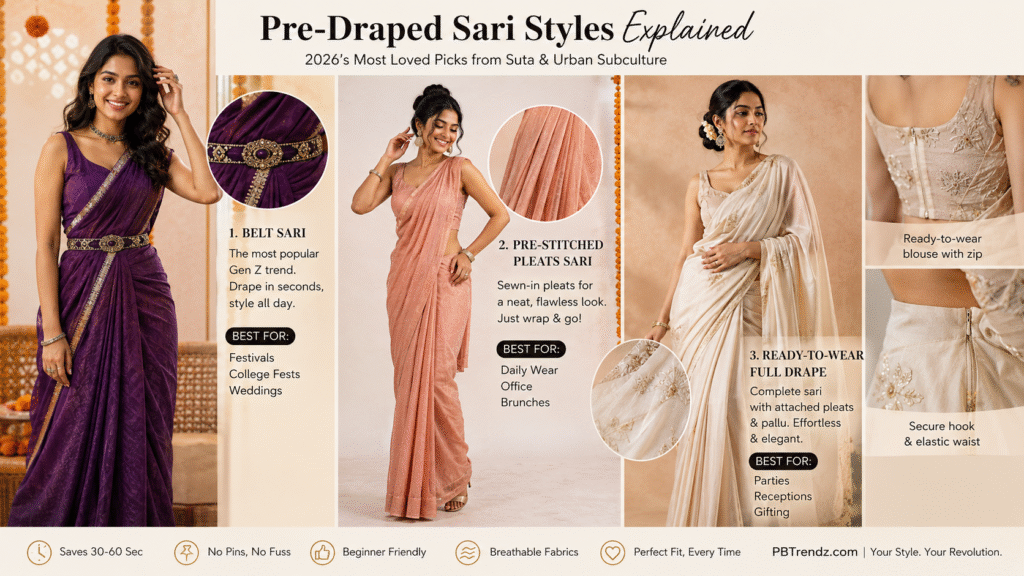
Unlike traditional saris that demand skill, patience, and often a helping hand, pre-draped versions are all about when and how you wear them. It’s like setting a timer for your ethnic look—slip it on in seconds and own the room. Here are the popular styles dominating 2026:
- Belt Saree Trend: A pre-pleated skirt with a matching pallu that secures with a stylish belt—think modern twist on the classic.
- Pre-Stitched Pleats (Suta Style): The entire lower half is stitched and ready; just drape the pallu and go.
- Ready-to-Wear Full Drape: Fully pre-constructed with hidden hooks or elastic—perfect for no-pallu style minimalists or fusion looks.
- Hybrid Fusion Options: Urban Subculture’s line mixes georgette, chiffon, and sustainable cottons with subtle prints or embroidery for breathable all-day wear.
The pitch? These designs give you the sari’s elegance without the drama. They’re lightweight, wrinkle-resistant, and built for India’s chaotic schedules—college lectures turning into after-parties, or office casual Fridays. For the average Gen Z girl, it’s a confidence booster that fits real life.
The Big Debate: Does the Pre-Draped Revolution Help or Hurt the Sari?
Here’s where it gets juicy—traditionalists, fashion influencers, and Gen Z wearers don’t always see eye to eye. Let’s break it down with fresh angles.
The Pros: Why Pre-Draped Saris Are Winning Hearts
- Time-Saving Magic: In a world of 60-second reels, who has 30 minutes to drape? These let you get ready faster than tying shoelaces—perfect for rushed mornings or last-minute plans.
- Inclusivity and Accessibility: Beginners, plus-size women, and busy professionals finally feel seen. No more body-shaming over uneven pleats or slipping pallus. It opens the sari to a million new wearers.
- Modern Comfort and Versatility: Breathable fabrics, stretch elements, and fuss-free ethnic styles mean you can dance, commute, or present without worry. Many come in sustainable options too—aligning with Gen Z values.
- Viral Boost for the Sari: Social media is flooded with easy sari drape tutorials. Instead of dying out, the sari is getting a trendy revival through convenience fashion in India.
Take Neha’s story: Her pre-draped pick turned a stressful fest into her most memorable night. “I felt empowered, not restricted,” she says.
The Cons: Where the Criticism Hits Hard
- Cultural Hand-Wringing: Veterans argue it betrays the sacred art of draping passed down through generations. “A stitched sari isn’t really a sari,” some aunties and designers lament.
- Loss of Personal Touch: The joy of perfecting your own drape, the family bonding over safety pins—some feel that’s disappearing.
- Quality and Longevity Concerns: Cheaper versions might not hold up like handloom originals, raising questions about craftsmanship in mass-produced easy sari options.
- Identity Questions: Is this diluting Indian heritage for global appeal? In a fast-paced world, are we trading authenticity for speed?
Priya experienced the downside early on: “I tried a budget pre-draped once, and while convenient, it didn’t feel as ‘me’ as learning the real way.” Balanced view? It’s not black-and-white—these innovations are evolving the sari, not erasing it.

The Indian Twist: Pre-Draped Meets Tradition and Gen Z Hustle
The sari isn’t new to us—it’s woven into every festival, wedding, and milestone. But Gen Z is rewriting the rules. College freshers’ parties, Diwali office dos, or casual family gatherings now see pre-draped saris stealing the show. Brands are blending heritage weaves (Banarasi, Kanjeevaram-inspired prints) with modern tech like elastic waists and hidden belts.
Our desi diets of heavy carbs and hectic lifestyles mirror the need for easy solutions. Just like tweaking traditional recipes for health, the pre-draped sari tweaks the drape for today’s rhythm. It honours roots while embracing the Indian youth cultural shift—no more choosing between looking ethnic and feeling free. From Mumbai streets to Bengaluru campuses, this is convenience fashion India at its smartest.
Real Stories: Triumphs and Tumbles from Gen Z Wardrobes
Let’s hear from the girls living the revolution.
- Meera, 20, Kolkata: Dived into a Suta belt saree for her first internship interview. “Landed the job and felt like a boss—no drape anxiety!” But she admits early versions felt stiff until she learned layering tricks.
- Riya, 23, Hyderabad: Opted for a pre-stitched no-pallu style for a college fest. “Wore it straight from class to party—zero adjustments, maximum compliments.” She now mixes it with modern jewellery for hybrid looks.
- Anika, 19, Pune: Tried a viral easy sari drape reel but found cheap dupes disappointing in quality. “Switched to a mid-range Urban Subculture piece and never looked back. My mom even approves now!”
These tales prove one thing: the pre-draped sari isn’t a magic fix. It’s a tool—how you style and own it matters most.
60-Second Sari Mastery: Tips to Get It Right
Thinking of joining the revolution? Here’s how to keep it authentic, comfortable, and stunning:
- Ease In: Start with a simple belt saree trend or pre-stitched from trusted brands like Suta. Practice once at home before the big day.
- Choose Fabric Wisely: Opt for breathable cotton, georgette, or linen blends for Indian summers and long wear. Avoid heavy silks for daily use.
- Accessorise Smartly: Minimal gold jhumkas, a modern clutch, or kolhapuri sandals elevate the look without effort. Add a bindi or maang tikka for that desi pop.
- Listen to Your Vibe: Track how it feels—comfort, movement, confidence. If it pinches or slips, tweak the belt or size.
- Get Expert Eyes: Follow Gen Z creators on Instagram or visit local boutiques for personalised fits. Your body, your rules.
Chill Out on Perfection: Embrace slight “imperfections” for that human, lived-in charm. Pair with a smile—it’s the best accessory.
Desi Style Hacks: Styling Pre-Draped Saris for Every Occasion
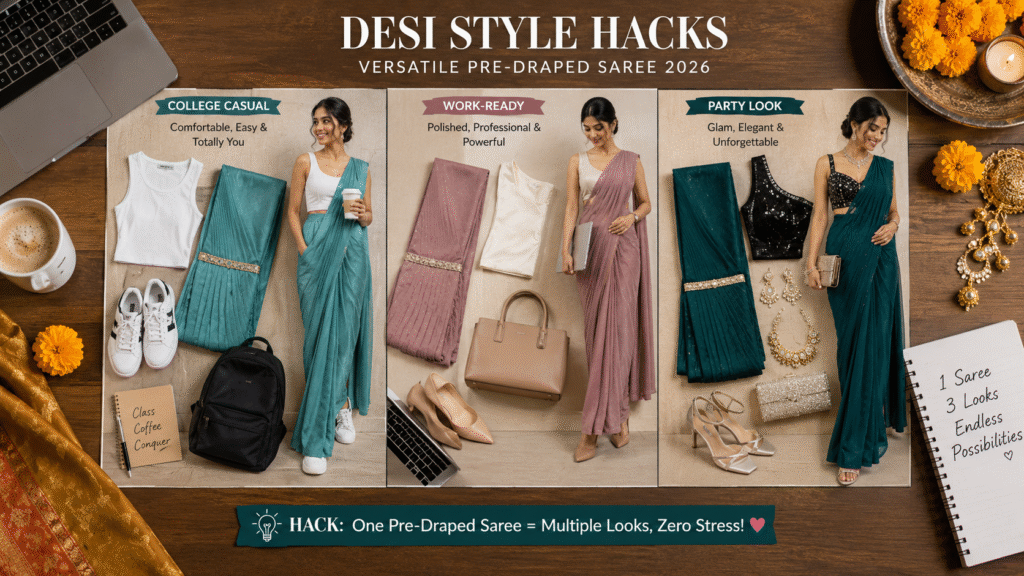
What you pair with your 60-second sari can make or break the vibe. Here’s a Gen Z-friendly Indian look guide:
- College Fest/ Casual Days: Pre-draped cotton sari with sneakers, crop top underneath for edgy fusion, and a denim jacket. Add chunky earrings for viral reel energy.
- Work/Internship Ready: Subtle embroidered pre-stitched in neutrals with block heels and a structured bag. Layer a short shrug for AC offices.
- Party or Wedding Guest: Richer tones with statement jewellery, heels, and a bold clutch. Experiment with no-pallu style for modern drama.
- Everyday Ethnic Hack: Lightweight pre-draped over jeans or leggings for hybrid comfort—perfect for campus hops or quick family outings.
Steer clear of mismatched accessories or overly casual footwear that clashes. Nourish your style with pieces that grow with you—mix, match, and repeat without guilt.
Wrapping It Up: To Drape Traditionally or Go Pre-Draped in 60 Seconds?
So, is the pre-draped saree 2026 revolution ditching the pallu for good—or giving the sari a much-needed second life? It’s not black-and-white. For some Gen Z women, it’s a lifesaver—slashing stress, boosting confidence, and drawing a million new wearers to the category. For others, it’s a reminder to cherish the slow art of tradition. The difference lies in how you approach it: mindfully, creatively, and with respect for both convenience and craft.
If the easy sari drape tempts you, dip your toes in. Start small, experiment with styles that feel like you, and lean on community reels or friends for inspiration. The sari is a marathon of heritage, not a sprint of perfection—and you’re tougher (and more stylish) than any challenge. What’s your take? Tried the pre-draped revolution yet? Drop your story below—let’s swap Gen Z ethnic hack tips and celebrate this modern sari movement together!
You May Like This
1



Advertisement
Advertisement
You May Like This








Advertisement
Advertisement
Advertisement
Advertisement
Advertisement
Advertisement