On 6 November, a film opens in international cinemas. Two days later, on Diwali, it opens in India.
Almost every number attached to Ramayana: Part 1 is larger than anything Indian cinema has previously attempted — and several of them are larger than anything global cinema has attempted.
Whether the film is good is a question nobody can answer yet. Whether the scale is real is a question that can be answered now.
What ₹4,000 crore actually covers
The figure that has followed this production for two years is ₹4,000 crore. It is usually reported as a production budget, which is where the disbelief comes from — no Indian film has spent a fraction of that on shooting.
In August, Yash, who plays Ravana and co-produces through Monster Mind Creations, put a boundary around it.
“₹4,000 crore is the budget for the two-part film, including release and promotion,” he said — adding that on a global release, marketing routinely matches or exceeds the cost of the film itself, “but the revenue is global too.”
That reframes it considerably. It is not ₹4,000 crore on one film’s cameras. It is two films, plus a worldwide prints-and-advertising spend, treated the way a Hollywood studio treats a tentpole.
It is still, by a distance, the most expensive thing Indian cinema has ever put into production.
59,000 screens is a number without a comparison
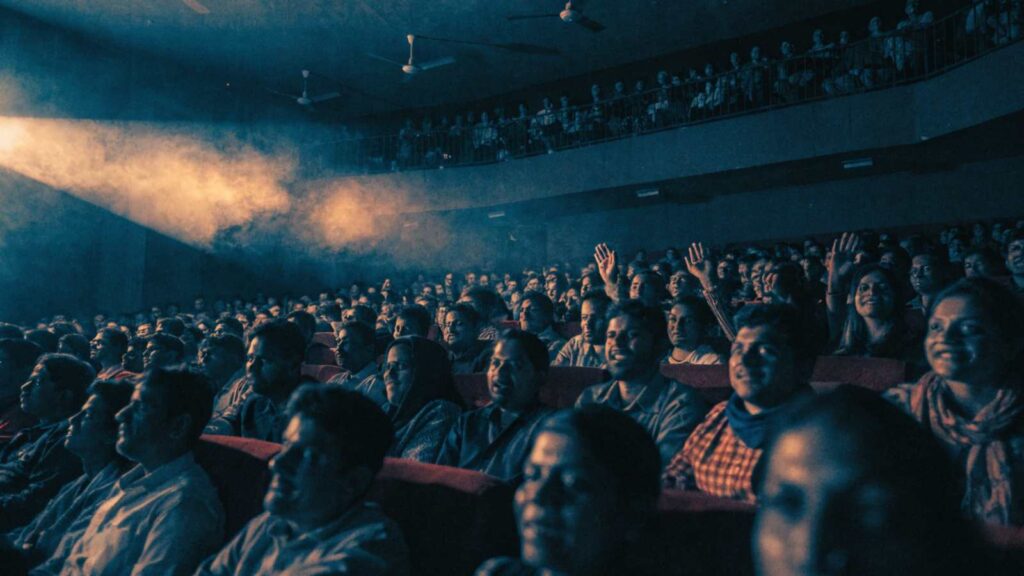
The distribution target reported for Part 1 is roughly 59,000 screens worldwide — over 50,000 overseas and around 9,000 in India.
To place that:
Pushpa 2: The Rule went out on 12,000–13,000 screens.
RRR went out on 10,000–11,000.
Avatar: The Way of Water, one of the widest releases in the history of the medium, opened on roughly 52,000.
If that target is hit, an Indian film will have the widest opening in cinema history. Not the widest Indian opening — the widest.
Sony Pictures is handling international distribution, which is the mechanism that makes a number like this even theoretically possible. No Indian distributor has that footprint.
Fifty languages, and the machine doing it
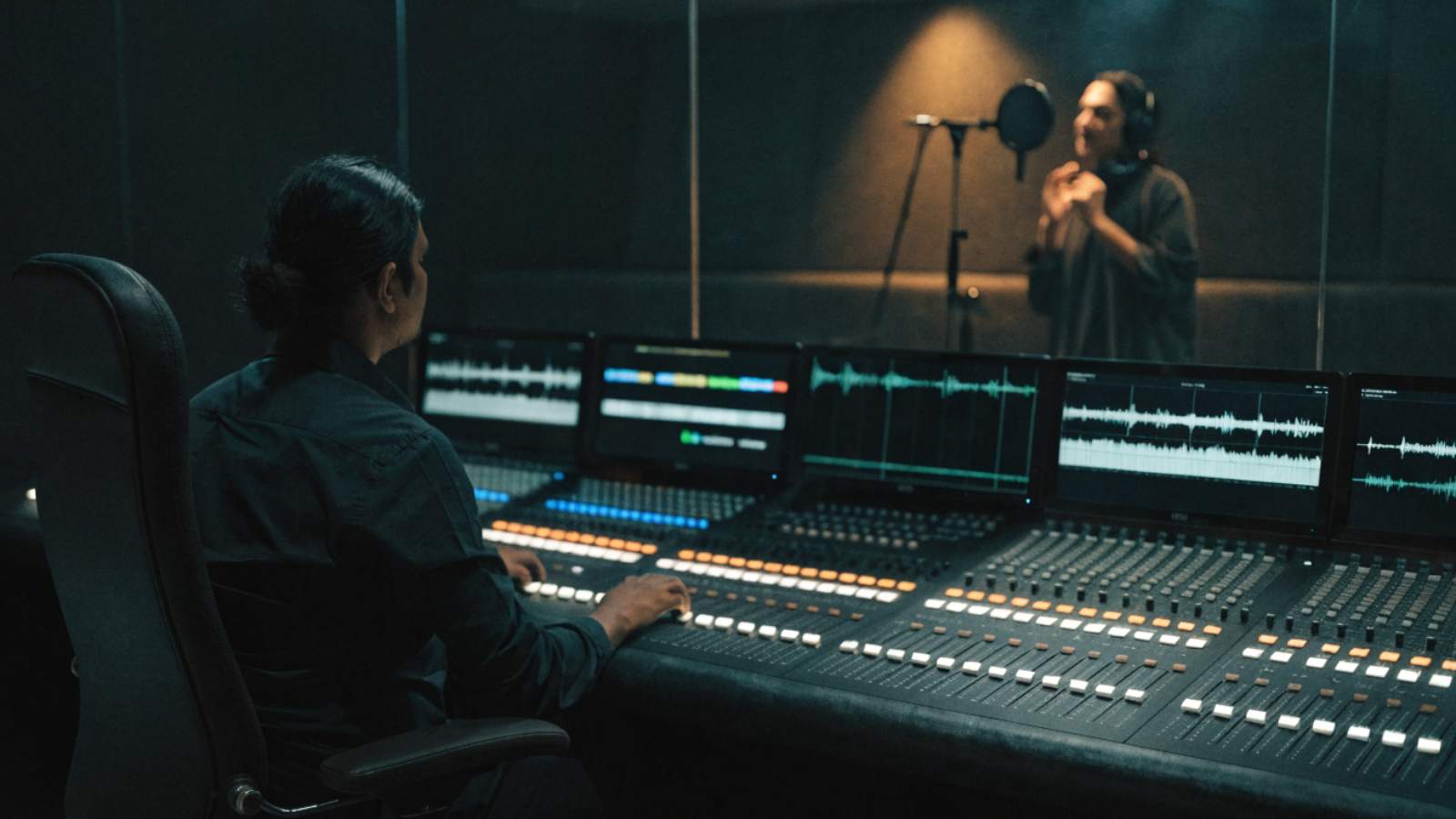
The release is planned in close to 50 languages, using DNEG’s Brahma AI lip-sync technology — software that reshapes an actor’s mouth movements to match the dubbed track, so the performance does not visibly drift out of sync.
This is the part of the project with consequences well beyond one film.
Indian cinema’s ceiling has always been partly linguistic. A Telugu film that works in Telugu has to be rebuilt to work in Hindi, and rebuilt again to work in Tamil, and each rebuild costs money and loses something. If a film can be released into 50 languages at once, and the dub does not look like a dub, the economics of every future Indian production change.
That is either a genuine unlock or an expensive experiment. On 8 November, we find out which.
The names on the call sheet
The casting is the least surprising part: Ranbir Kapoor as Rama, Yash as Ravana, Sai Pallavi as Sita, directed by Nitesh Tiwari.
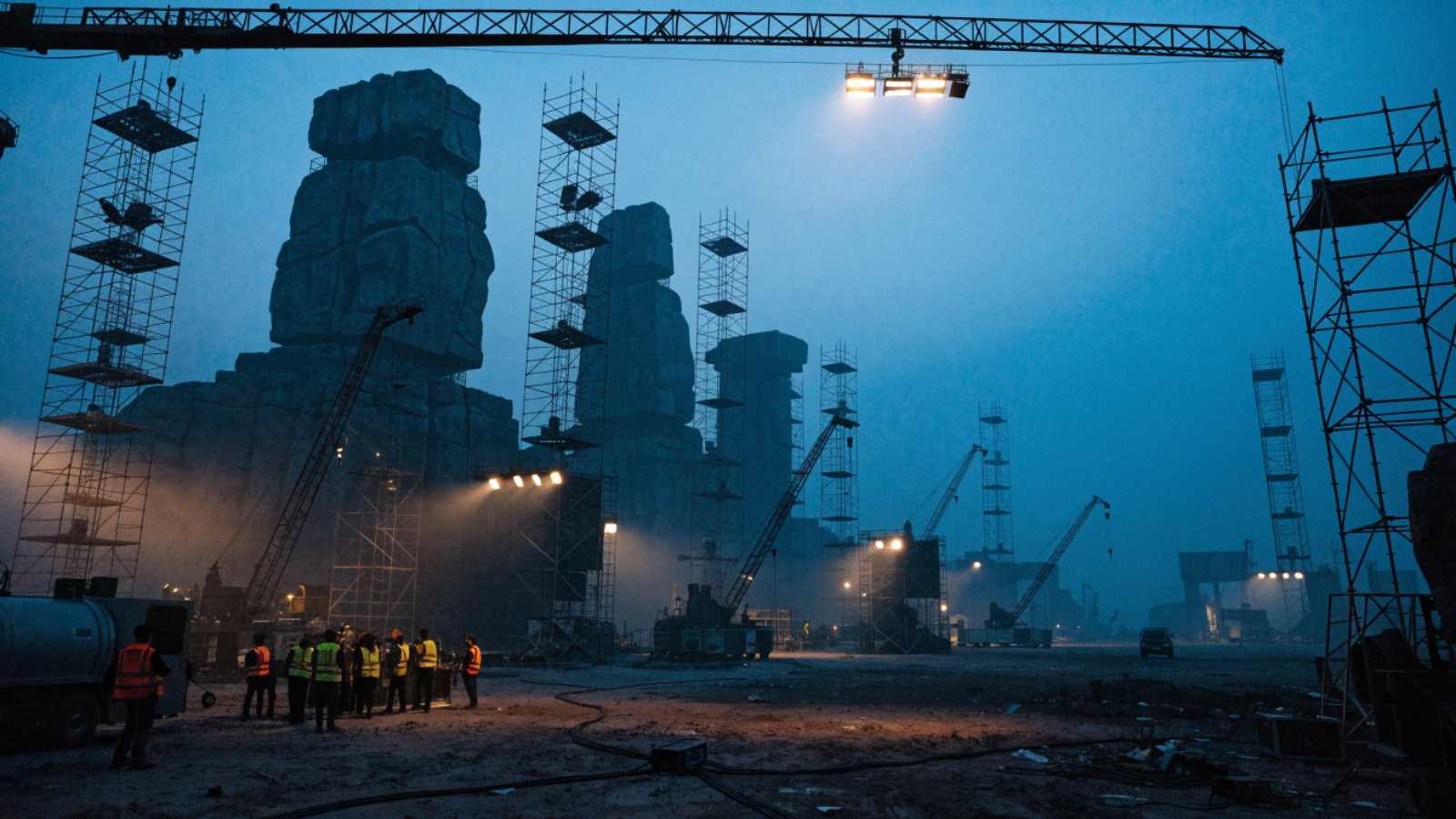
The technical roster is where the ambition shows. Hans Zimmer and AR Rahman are credited jointly on music — a pairing with no real precedent. Action is designed by Guy Norris, the stunt coordinator behind the Mad Max films. The production is backed by Prime Focus Studios and DNEG, meaning the VFX house is not a vendor on this film; it is an owner.
That last detail matters more than it sounds. Indian VFX has historically been the line item cut when a schedule slips. Here it is the balance sheet.
Two dates, two days apart
The staggered release has caused some confusion, and producer Namit Malhotra has explained it plainly: international distribution runs on a Friday cycle, so overseas territories get 6 November. India waits until Diwali on 8 November.
It is a small scheduling decision with an uncomfortable side effect. For roughly 48 hours, a film built on one of India’s foundational texts will have been seen everywhere except India — and every review, every reaction and every spoiler will be online before a single Indian ticket is torn.
In an era where opening-weekend word of mouth is decided in the first six hours, that is not a trivial gap.
What has to happen for this to work
The maths is unforgiving.
India’s entire box office for the first half of 2026 was about ₹6,398 crore across every film in every language. Dhurandhar: The Revenge, the biggest Hindi film ever made, has taken roughly ₹1,363 crore in India and ₹1,790 crore worldwide.
A ₹4,000 crore two-part production, even with the second part carrying half the load and even with global revenue, needs numbers that no Indian film has yet produced. It needs the overseas market not as a bonus but as a primary income stream — which is precisely what the 50,000 international screens and 50 languages are engineered to deliver.
This is why the screen count is not vanity. It is the business model.
Why it matters even if you never see it
Indian films have crossed over before. RRR won an Oscar. Baahubali built a franchise. But those were Indian films that the world happened to find.
Ramayana is the first time an Indian production has been financed, staffed, scheduled and distributed from the start as a global release that happens to be Indian. Everything about it — the Sony deal, the Zimmer credit, the Friday international date, the AI dubbing — is built for a market outside the country.
If it lands, the next decade of Indian film financing is rewritten and every producer with an epic in a drawer gets a meeting. If it does not, the conclusion drawn will be that Indian cinema’s ceiling is lower than this, and it will be a decade before anyone tries again at this size.
Very few films carry that much on an opening weekend. This one does.
Budget, screen-count and distribution figures are as publicly reported; the producers have confirmed the ₹4,000 crore figure covers both parts including release and promotion. Screen targets are stated intentions and may change before release.