
Advertisement

- Updated on April 15, 2026
- IST 6:56 am
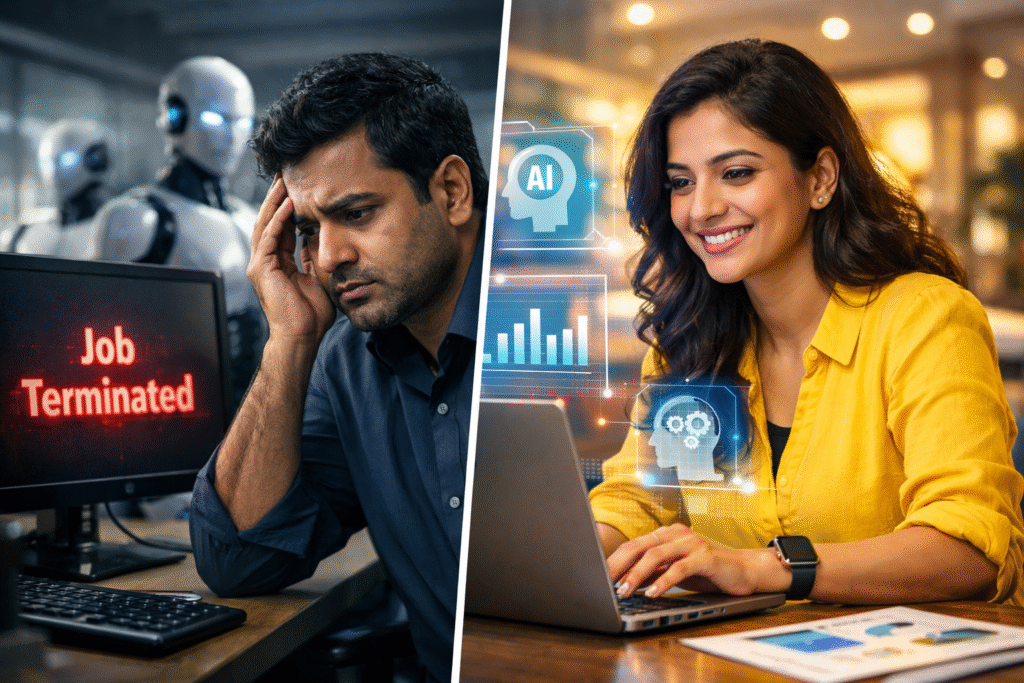
Picture this: Raj, a 32-year-old software tester from Bengaluru, had built his career on meticulous bug-hunting in code. For years, he thrived in the IT boom, earning a steady paycheck while juggling family life and weekend cricket matches. But in early 2026, his company rolled out an AI-powered testing tool that scanned code faster than he ever could. Overnight, his team shrank from 20 to 5. “I felt like a relic,” Raj confides, staring at his laptop screen, now filled with job applications instead of test cases. Bewildered, he wonders if his skills are obsolete in this new world.
Now, flip the script to Neha, 28, from Pune. She started as a data analyst in a mid-sized firm, crunching numbers on spreadsheets. When AI tools emerged, she didn’t panic—she pivoted. She upskilled in machine learning through online courses, learning to train AI models rather than just feed them data. Today, she’s leading a team that uses AI for predictive analytics, her salary has doubled, and she’s the go-to expert in her company. “AI didn’t steal my job; it supercharged it,” she beams, sipping chai during a virtual meeting.
So, what’s the real story? Is AI a job-killer lurking in the shadows, ready to swipe your livelihood, or a powerful ally that could propel your career to new heights? In India’s bustling job market, where millions chase stability amid economic shifts, this question keeps professionals up at night. This blog cuts through the hype to deliver a no-nonsense survival guide for 2026. We’ll spotlight jobs at high and low risk, unpack the “human” skills that AI can’t touch—like creativity, empathy, and complex problem-solving—and even include a self-assessment quiz to gauge your vulnerability. Rooted in real data and stories from Indian pros, this isn’t fear-mongering; it’s your actionable roadmap to thrive. Let’s unpack it step by step.
Understanding the AI Revolution: A Double-Edged Sword for Careers
First off, let’s ground ourselves in what AI really means for jobs. Artificial Intelligence isn’t some sci-fi robot army—it’s algorithms and systems that mimic human intelligence to perform tasks. From chatbots handling customer queries to predictive models forecasting market trends, AI is infiltrating every sector. In India, where the economy hinges on services like IT and BPO, the stakes are sky-high. Reports suggest AI could add up to $957 billion to India’s GDP by 2035, but at what cost to workers? Think of it like the smartphone revolution: It killed off landlines and typewriters but birthed app developers and digital marketers.
The ripple effects are profound. AI excels at repetitive, data-heavy tasks, freeing humans for higher-level work. But for many, especially in entry-level roles, this shift feels like a tidal wave. Globally, estimates peg 300 million full-time jobs at risk of automation, with India potentially losing 650,000 IT service jobs alone by 2026. Yet, optimism persists—experts predict AI could create 1 million new jobs in India by 2026, particularly in tech and data roles. It’s a hormonal rollercoaster, much like PCOS in the sample blog, where balance is key. For Indian professionals aged 15-45, navigating this means understanding your role’s vulnerability and arming yourself with skills that complement AI, not compete with it.
AI Automation Explained: Timing Over Tradition
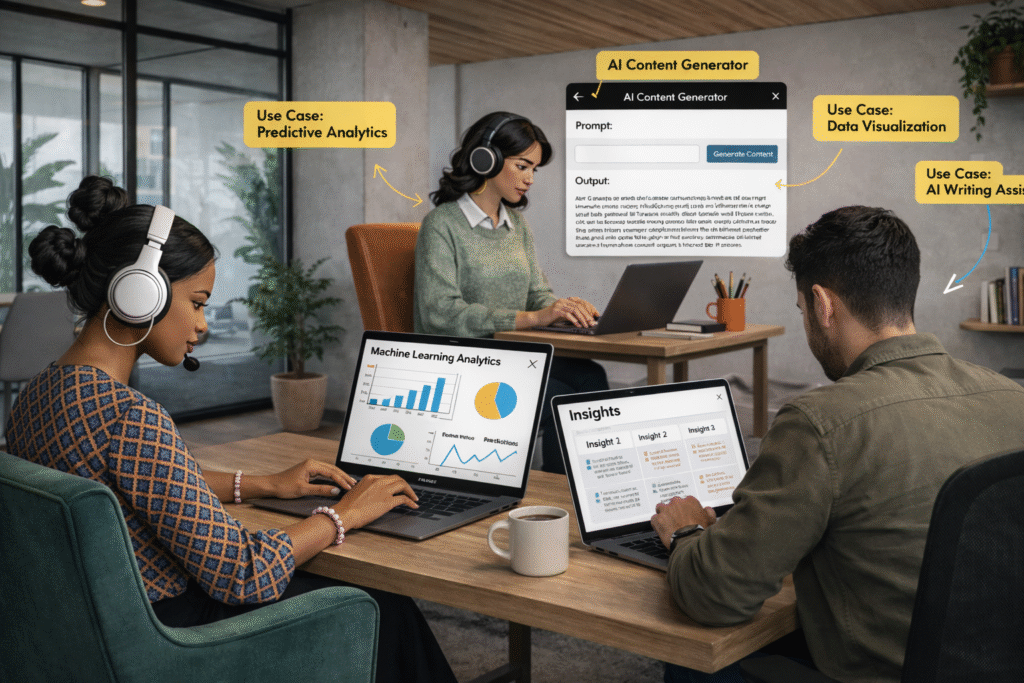
Unlike traditional automation—think assembly lines—AI automation is about intelligence, not just mechanics. It’s like setting a smart clock for your work: AI handles the routine ticks, while you focus on the big-picture chimes. Popular forms include:
- Machine Learning: Systems that learn from data, like recommendation engines on Netflix or fraud detection in banking.
- Generative AI: Tools like ChatGPT that create content, code, or designs from prompts.
- Robotic Process Automation (RPA): Bots that mimic human actions in software, streamlining back-office tasks.
The appeal? Efficiency. AI can process vast data in seconds, reducing errors and costs. For the average Indian worker, this means jobs evolve—coders now debug AI-generated code, analysts interpret AI insights. But in a country with 1.4 billion people and youth unemployment hovering at 17%, the fear is real: Will AI sync with our aspirations or throw us off rhythm?
The Big Debate: Does AI Destroy or Create Jobs?
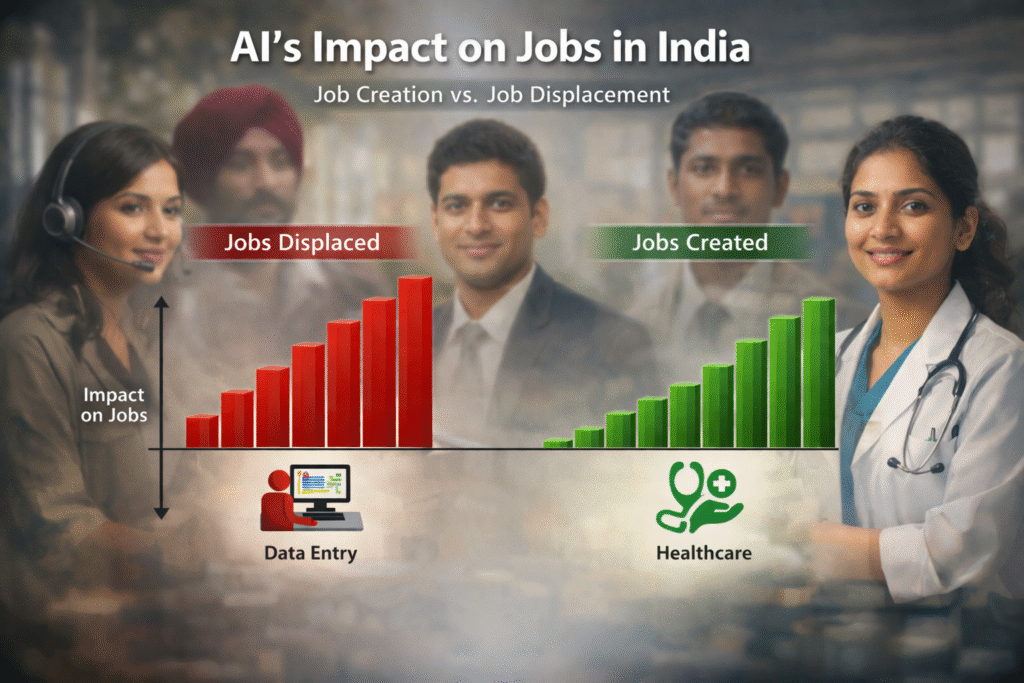
Here’s where opinions clash like Diwali fireworks. Experts and everyday pros don’t see eye-to-eye, so let’s dissect the pros and cons with balance.
The Pros: Why AI Might Boost Your Career
- Job Creation in New Fields: AI isn’t just displacing; it’s birthing roles like AI ethicists, prompt engineers, and data annotators. In India, demand for AI specialists is skyrocketing, with startups planning to add 170,000 jobs in AI/ML and cloud roles.
- Enhanced Productivity: By automating drudgery, AI lets you focus on innovation. Imagine a marketer using AI for ad targeting, freeing time for creative campaigns—productivity could surge, leading to economic growth and more jobs.
- Upskilling Opportunities: Many see AI as a catalyst for better work. Neha’s story echoes this: Her pivot to AI tools turned her from analyst to strategist, boosting her income and job satisfaction.
Studies back this—AI could add 2.73 million tech jobs in India by 2028, especially in software development and data engineering. It’s like fasting done right: A reset that energizes rather than exhausts.
The Cons: Where AI Might Backfire
- Mass Displacement: Routine jobs are toast. Data entry, call center roles, and basic coding face 90%+ automation risk. In India’s IT sector, 5.8 million jobs could be at risk as companies prioritize profits over headcount.
- Inequality Spike: White-collar workers, once safe, are now vulnerable. Entry-level gigs in BPO and finance might vanish, hitting fresh graduates hard in a market where 20-25 million jobs could be displaced by 2030.
- Skill Gaps: Without reskilling, many will struggle. Raj’s tale highlights this—his outdated skills left him drained, much like prolonged fasting stressing the body.
The debate isn’t black-and-white; AI will reshape 40% of global jobs, with India’s exposure at 26%, but absolute numbers are huge due to our workforce size.
The Indian Twist: AI Meets Our Unique Job Landscape
AI isn’t landing in a vacuum—it’s crashing into India’s vibrant, chaotic job scene. Our economy thrives on IT exports, employing over 5 million, but AI threatens this backbone. Think of it as fasting during Navratri: Cultural, but risky if not balanced with nutrition. Traditional sectors like agriculture and manufacturing might see AI boost yields via predictive farming, creating jobs in rural areas. But urban hubs like Mumbai and Hyderabad face turbulence—BPO, a lifeline for many, could “almost disappear” in five years.
Our youth bulge adds urgency: With 10 million entering the workforce yearly, AI could worsen unemployment if we don’t adapt. Yet, India’s edge? Our massive talent pool. Global Capability Centers (GCCs) are expanding, needing AI-savvy pros for specialized roles. The trick: Blend desi ingenuity with AI, like using local languages in NLP tools for better customer service.
Real Stories: Triumphs and Tumbles from the Frontlines
Let’s hear from those living it.
- Amit, 35, Hyderabad: A call center supervisor, he saw AI chatbots handle 70% of queries. His team halved, but he reskilled in AI oversight, now managing bot-human hybrids. “It was scary, but now I’m indispensable.”
- Priya, 24, Delhi: Fresh out of college, her data entry gig vanished to RPA. Unemployed for months, she shares, “I felt invisible. But I’m learning Python—hoping for a comeback.”
- Vikram, 40, Chennai: An IT manager, he embraced AI for project management, cutting timelines by 30%. “AI is my sidekick, not enemy,” he says, his promotion proving it.
These narratives show AI’s dual nature: A tool that rewards adaptation but punishes stagnation.
Self-Assessment Quiz: Is Your Job AI-Proof?

Time for introspection. Answer these 10 yes/no questions (score 1 for yes), then tally up.
- Does your job involve repetitive tasks like data entry or basic analysis?
- Can most of your daily work be described by rules or patterns?
- Is your role in IT services, BPO, or finance with routine processes?
- Do you rarely need creative problem-solving or emotional intelligence?
- Has your company adopted AI tools in the last year?
- Is your job entry-level with limited human interaction?
- Does your work lack physical presence or hands-on skills?
- Are similar roles being automated globally?
- Do you feel underprepared for tech changes?
- Is upskilling not part of your routine?
Score: 0-3: Low risk—your job likely needs human essence. 4-7: Medium—start upskilling. 8-10: High—act now! This quiz, inspired by global reports, highlights vulnerabilities.
Survival Guide: Tips to Get It Right in the AI Era
Ready to armor up? Here’s your practical playbook:
- Assess and Adapt: Use the quiz above. Identify gaps— if data-heavy, learn AI interpretation.
- Build Human Superpowers: Focus on irreplaceable skills like creativity (e.g., ideation), empathy (client relations), and complex problem-solving (strategic decisions). These are AI-proof.
- Upskill Smartly: Master Python, machine learning, and prompt engineering—demand is up 75% for AI skills. Platforms like Coursera offer free trials.
- Network and Diversify: Join AI communities on LinkedIn; consider hybrid roles blending domain expertise with tech.
- Stay Ethical: Learn AI bias detection—roles in ethical AI are booming.
- Monitor Trends: Follow NITI Aayog reports; adapt to GCC growth.
- Balance Work-Life: Stress from change is real—practice mindfulness to stay resilient.
- Seek Guidance: Consult career coaches or mentors in AI fields.
Desi Upskilling Hacks: Tailored for Indian Pros
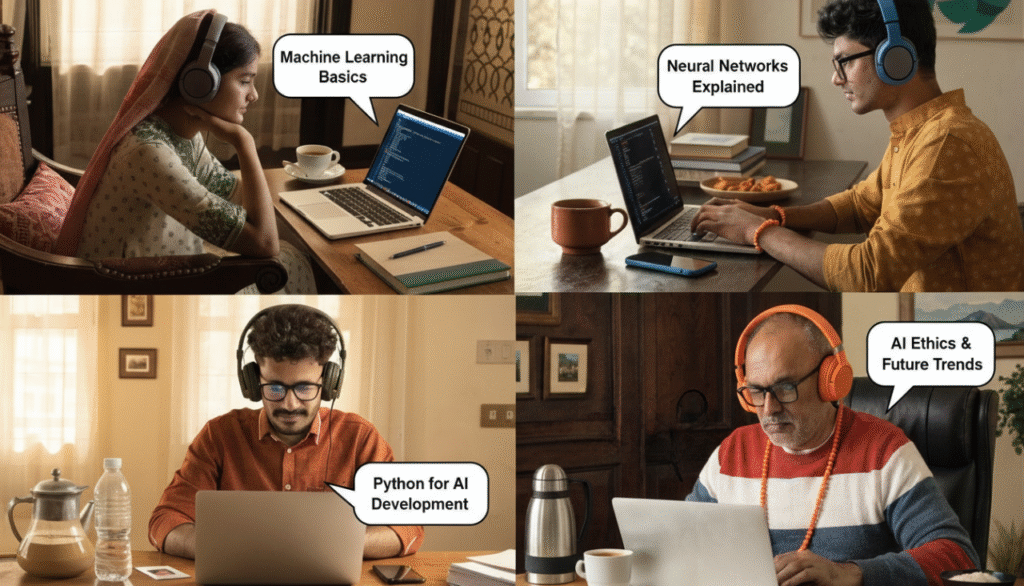
What you “feed” your career matters. Here’s a PCOS-friendly “meal plan” adapted to skills:
- Breakfast (Quick Start): Free YouTube tutorials on Python basics—bite-sized, like moong dal chilla.
- Lunch (Core Nourishment): Enroll in Udacity’s AI Nanodegree or IIT’s online ML courses—balanced like brown rice with dal and veggies.
- Snack (Boosters): Practice on Kaggle datasets or join Hackathons—energizing like roasted chana.
- Dinner (Deep Dive): Read “AI Superpowers” or attend NASSCOM webinars—light yet fulfilling.
Avoid “junk” like outdated certs. Platforms like Skill India Digital Hub offer free AI courses, targeting our 15-45 demographic. For women in tech, initiatives like Women Who Code India provide mentorship.
Wrapping It Up: Embrace AI or Get Left Behind?
So, is AI coming for your job? It might—if you let it. For some Indian pros, it’s a disruptor, slimming teams and demanding change. For others, it’s a booster, creating opportunities in a market projected to need 1 million AI pros by 2026. The key? Act now—slowly, smartly, with guidance. This isn’t a sprint; it’s a marathon where the adaptable win. What’s your AI story? Tried upskilling? Faced displacement? Share in the comments—let’s build a community and lift each other. Head to PBTrendz.com for more guides, and start your free AI course today. You’re tougher than any algorithm!
You May Like This



Advertisement

You May Like This








Advertisement

Advertisement

Advertisement